How Assessing Vehicle Damage Can Prove Fault for a Car Accident
How Assessing Vehicle Damage Can Prove Fault for a Car Accident
- posted: Aug. 15, 2024
- Personal injury, Auto Accident
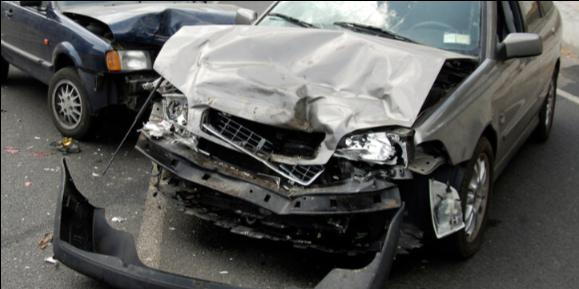
Determining causation and fault in a car accident involves a careful analysis of various types of evidence, including the damage to the vehicles involved. This, along with other forensic evidence, can help reconstruct the events leading up to the collision and identify the at-fault driver and the extent of their responsibility.
The location of the damage on the vehicles can provide insight into how the accident occurred. As examples:
If one vehicle has front-end damage while another has rear-end damage, it typically suggests that the driver of the rear vehicle was at fault for not maintaining a safe following distance.
Side-impact damage, such as at an intersection, may indicate that one vehicle ran a red light or stop sign, striking another vehicle crossing its path.
In the case of a left-turn accident, damage to the front corner of the turning vehicle could indicate that the driver was entering the intersection negligently. Damage to the rear corner of the turning vehicle could mean that the oncoming vehicle’s driver was speeding or was reckless.
The severity of the damage also is a factor to be analyzed. More extensive damage might imply higher speeds at the time of impact, possibly pointing to reckless or negligent behavior.
In addition to the location and severity, the pattern of damage can be revealing. For example, crumple zones and deformation patterns can suggest the direction and angle of the collision.
Beyond the damage to the vehicles, these other types of forensic evidence at the scene of the accident can help demonstrate causation and fault:
Skid marks are vital indicators of a vehicle's behavior just before the collision. Long, straight skid marks typically indicate that a driver attempted to brake hard to avoid the collision. Curved skid marks can indicate a loss of control, possibly due to speeding or evasive maneuvers. Length and depth of skid marks can help estimate the speed of a vehicle at the time of braking.
Debris location and distribution can provide clues about the point of impact and the movement of vehicles post-collision. If debris is scattered in a wide area, it might indicate a high-speed collision. The pattern of debris can also help determine the angles at which the vehicles collided.
Vehicle rest positions can also offer insights. If one vehicle is found far from the point of collision, it might suggest it was moving at a high speed or was pushed by the impact forcefully. Comparing these positions with the skid marks and debris can help create a comprehensive picture of the accident.
An experienced automobile accident attorney can piece together this evidence in a way that reveals the sequence of events leading to the collision and helps identify the responsible driver.
Rich & Rich, P.C., with locations in Manhattan and Long Island, represents auto accident victims throughout the New York metropolitan area. Please call 917-746-3358 or contact us online for a free consultation.
How Assessing Vehicle Damage Can Prove Fault for a Car Accident
- posted: Aug. 15, 2024
- Personal injury, Auto Accident
Determining causation and fault in a car accident involves a careful analysis of various types of evidence, including the damage to the vehicles involved. This, along with other forensic evidence, can help reconstruct the events leading up to the collision and identify the at-fault driver and the extent of their responsibility.
The location of the damage on the vehicles can provide insight into how the accident occurred. As examples:
If one vehicle has front-end damage while another has rear-end damage, it typically suggests that the driver of the rear vehicle was at fault for not maintaining a safe following distance.
Side-impact damage, such as at an intersection, may indicate that one vehicle ran a red light or stop sign, striking another vehicle crossing its path.
In the case of a left-turn accident, damage to the front corner of the turning vehicle could indicate that the driver was entering the intersection negligently. Damage to the rear corner of the turning vehicle could mean that the oncoming vehicle’s driver was speeding or was reckless.
The severity of the damage also is a factor to be analyzed. More extensive damage might imply higher speeds at the time of impact, possibly pointing to reckless or negligent behavior.
In addition to the location and severity, the pattern of damage can be revealing. For example, crumple zones and deformation patterns can suggest the direction and angle of the collision.
Beyond the damage to the vehicles, these other types of forensic evidence at the scene of the accident can help demonstrate causation and fault:
Skid marks are vital indicators of a vehicle's behavior just before the collision. Long, straight skid marks typically indicate that a driver attempted to brake hard to avoid the collision. Curved skid marks can indicate a loss of control, possibly due to speeding or evasive maneuvers. Length and depth of skid marks can help estimate the speed of a vehicle at the time of braking.
Debris location and distribution can provide clues about the point of impact and the movement of vehicles post-collision. If debris is scattered in a wide area, it might indicate a high-speed collision. The pattern of debris can also help determine the angles at which the vehicles collided.
Vehicle rest positions can also offer insights. If one vehicle is found far from the point of collision, it might suggest it was moving at a high speed or was pushed by the impact forcefully. Comparing these positions with the skid marks and debris can help create a comprehensive picture of the accident.
An experienced automobile accident attorney can piece together this evidence in a way that reveals the sequence of events leading to the collision and helps identify the responsible driver.
Rich & Rich, P.C., with locations in Manhattan and Long Island, represents auto accident victims throughout the New York metropolitan area. Please call 917-746-3358 or contact us online for a free consultation.
Contact the Firm
New York City Office
1430 Broadway,
Suite 1802,
New York, New York 10018
Roslyn Heights Office
277 Willis Avenue,
1st Floor,
Roslyn Heights, New York 11577

