Types of Accidents Unique to Semi-trucks and What Causes Them
Types of Accidents Unique to Semi-trucks and What Causes Them
- posted: Jun. 30, 2025
- Truck Accident
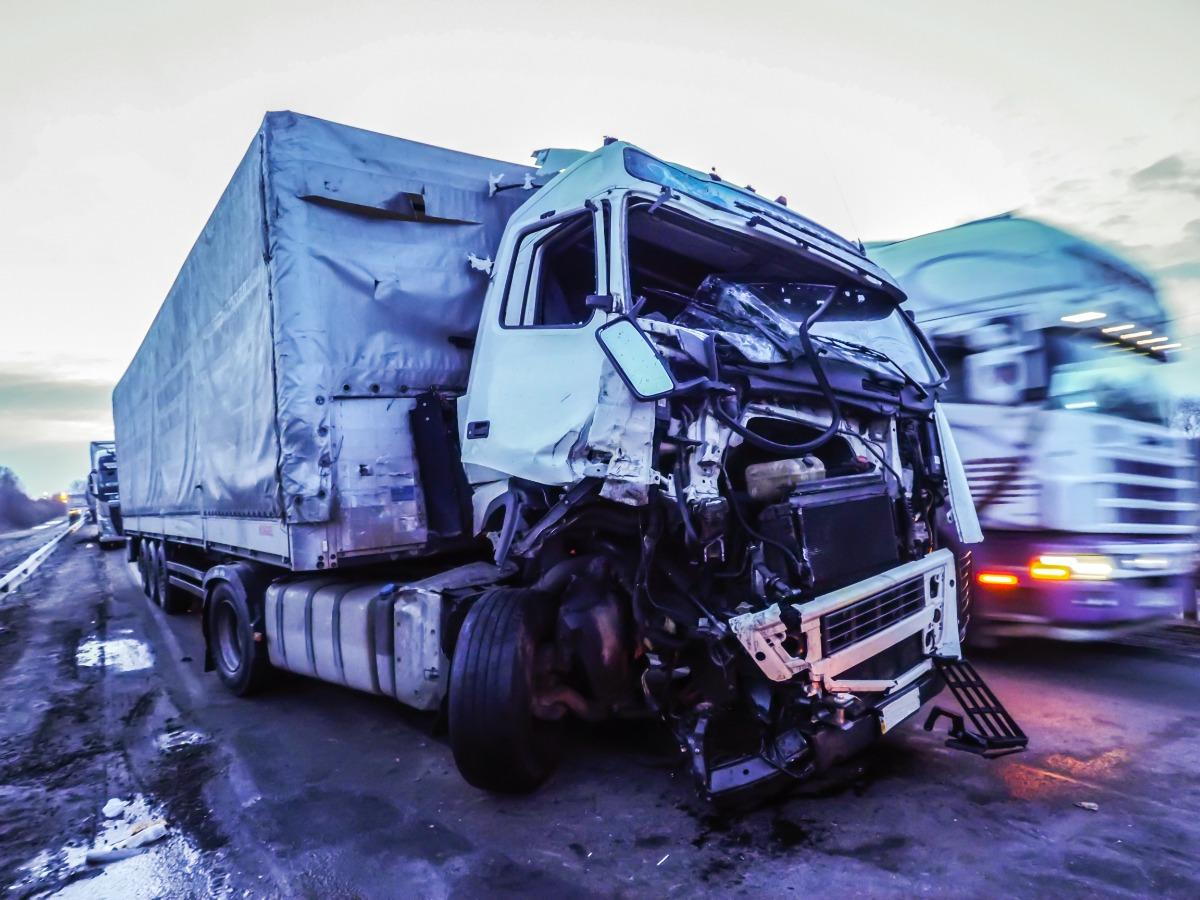
Semi-trucks, also known as tractor-trailers or 18-wheelers, are large commercial vehicles used for transporting goods across long distances. Due to their massive size, heavy weight and limited maneuverability, semi-trucks can cause significant damage and bodily injury in collisions with other vehicles. Understanding the causes of semi-truck accidents can be helpful in protecting your safety on the roads and in pursuing financial compensation if you’re in an accident.
Here is a breakdown of common types of semi-truck accidents:
Head-on collisions — This type of accident occurs when a tractor -trailer crosses over into the lanes of oncoming traffic, striking another vehicle head on. The injuries from head-on semi-truck crashes are usually severe and may result in crippling injuries and death.
T-bone collisions — These occur when the front of a semi-truck collides with the side of another vehicle, or vice versa. Commonly happening at intersections, the impact of a semi-truck against a smaller vehicle can be particularly destructive, often resulting in severe injuries or fatalities due to the disparity in size and protective structure.
Jackknifes — This type of accident happens when the trailer of the semi-truck swings out and forms a sharp angle with the tractor, resembling a folding pocket knife. Jackknifing may be caused by sudden braking, slippery road conditions, or improper maneuvers by the truck driver. These accidents can affect multiple lanes and involve several vehicles, significantly increasing the likelihood of a multi-vehicle pile-up.
Rollovers — These accidents occur when a semi-truck flips onto its side. This can happen due to various reasons such as loss of control, excessive speed, taking turns too sharply, or carrying unbalanced loads. The danger of rollovers extends beyond the truck itself as it can block entire roadways and pose significant risks to nearby motorists.
Sideswipes — When a truck changes lanes without noticing a smaller vehicle in its blind spot or when a vehicle drifts from its lane, the two vehicles might brush against each other, causing either vehicle to lose control and perhaps leading to further damage.
Wide-turn accidents — Semi-trucks can create hazardous situations while making turns, particularly right turns where the trailer swings wide to the left. This can result in the trailer striking nearby vehicles or objects, especially in crowded urban settings.
Override and underride collisions — Override accidents occur when a semi-truck runs over a smaller vehicle ahead, often because the truck cannot stop quickly enough. Underride collisions happen when a smaller vehicle slides under the trailer of a semi-truck from the rear or side. Both types of collisions are extremely dangerous and frequently result in severe or fatal injuries.
To minimize the risk of collisions with semi-trucks, you should maintain a safe following distance and avoid sudden lane changes. Make sure your vehicle is not in the truck driver’s blind spots and try to anticipate the wide turns a truck can make. In the event of an accident, an experienced truck accident attorney can provide guidance on your right to compensation. Even if fault for an accident is shared, you still may be able to recover damages.
The law firm of Rich & Rich, P.C. represents victims of truck accidents through metropolitan New York area, helping them get the compensation they deserve. We have offices in Midtown Manhattan and Roslyn Heights, Long Island. Call us at 917-746-3358 or contact us online to arrange a free consultation.
Types of Accidents Unique to Semi-trucks and What Causes Them
- posted: Jun. 30, 2025
- Truck Accident
Semi-trucks, also known as tractor-trailers or 18-wheelers, are large commercial vehicles used for transporting goods across long distances. Due to their massive size, heavy weight and limited maneuverability, semi-trucks can cause significant damage and bodily injury in collisions with other vehicles. Understanding the causes of semi-truck accidents can be helpful in protecting your safety on the roads and in pursuing financial compensation if you’re in an accident.
Here is a breakdown of common types of semi-truck accidents:
Head-on collisions — This type of accident occurs when a tractor -trailer crosses over into the lanes of oncoming traffic, striking another vehicle head on. The injuries from head-on semi-truck crashes are usually severe and may result in crippling injuries and death.
T-bone collisions — These occur when the front of a semi-truck collides with the side of another vehicle, or vice versa. Commonly happening at intersections, the impact of a semi-truck against a smaller vehicle can be particularly destructive, often resulting in severe injuries or fatalities due to the disparity in size and protective structure.
Jackknifes — This type of accident happens when the trailer of the semi-truck swings out and forms a sharp angle with the tractor, resembling a folding pocket knife. Jackknifing may be caused by sudden braking, slippery road conditions, or improper maneuvers by the truck driver. These accidents can affect multiple lanes and involve several vehicles, significantly increasing the likelihood of a multi-vehicle pile-up.
Rollovers — These accidents occur when a semi-truck flips onto its side. This can happen due to various reasons such as loss of control, excessive speed, taking turns too sharply, or carrying unbalanced loads. The danger of rollovers extends beyond the truck itself as it can block entire roadways and pose significant risks to nearby motorists.
Sideswipes — When a truck changes lanes without noticing a smaller vehicle in its blind spot or when a vehicle drifts from its lane, the two vehicles might brush against each other, causing either vehicle to lose control and perhaps leading to further damage.
Wide-turn accidents — Semi-trucks can create hazardous situations while making turns, particularly right turns where the trailer swings wide to the left. This can result in the trailer striking nearby vehicles or objects, especially in crowded urban settings.
Override and underride collisions — Override accidents occur when a semi-truck runs over a smaller vehicle ahead, often because the truck cannot stop quickly enough. Underride collisions happen when a smaller vehicle slides under the trailer of a semi-truck from the rear or side. Both types of collisions are extremely dangerous and frequently result in severe or fatal injuries.
To minimize the risk of collisions with semi-trucks, you should maintain a safe following distance and avoid sudden lane changes. Make sure your vehicle is not in the truck driver’s blind spots and try to anticipate the wide turns a truck can make. In the event of an accident, an experienced truck accident attorney can provide guidance on your right to compensation. Even if fault for an accident is shared, you still may be able to recover damages.
The law firm of Rich & Rich, P.C. represents victims of truck accidents through metropolitan New York area, helping them get the compensation they deserve. We have offices in Midtown Manhattan and Roslyn Heights, Long Island. Call us at 917-746-3358 or contact us online to arrange a free consultation.
Contact the Firm
New York City Office
1430 Broadway,
Suite 1802,
New York, New York 10018
Roslyn Heights Office
277 Willis Avenue,
1st Floor,
Roslyn Heights, New York 11577

